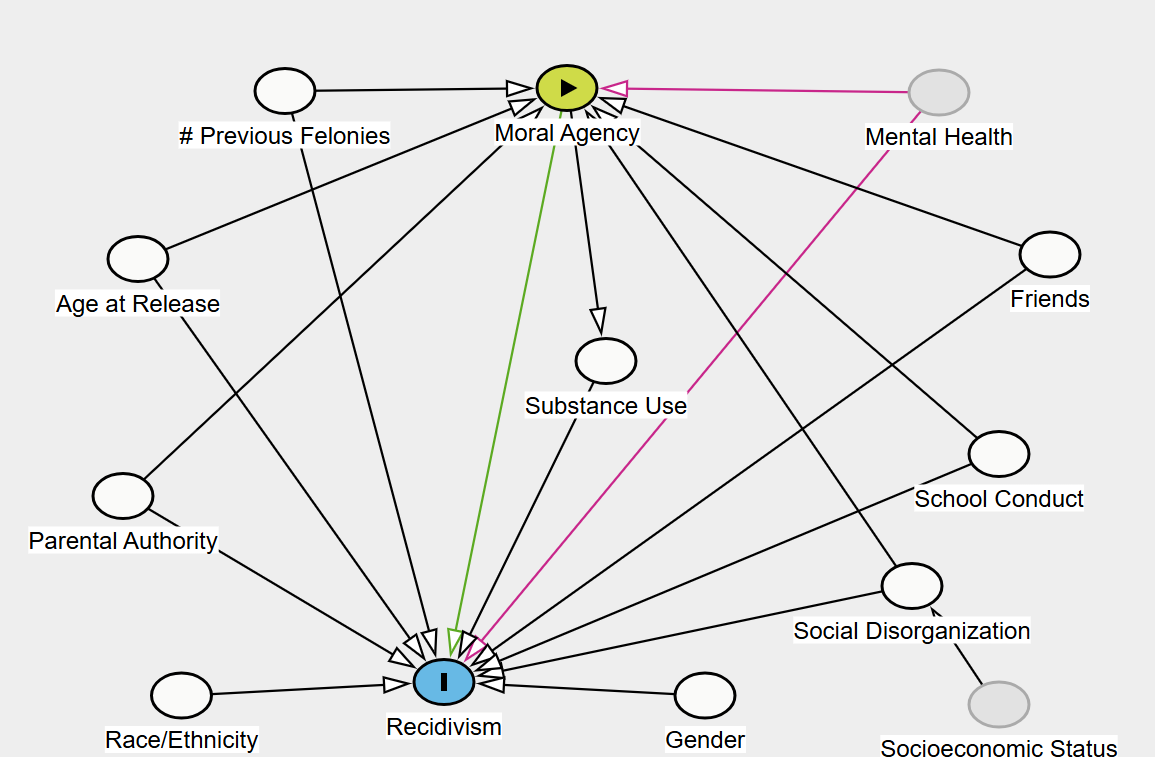
Crime is a multifaceted social construct rooted in the interplay of psychological, sociological, legal, and historical dimensions. Due to this complex web of influences, the etiology of crime remains elusive, posing significant obstacles for policymakers and legal professionals to deter crimes. While penal measures have long been central to upholding justice and/or social order, addressing crime solely through punitive approaches risks overlooking the underlying motivations behind criminal behavior. A deeper understanding of delinquent drivers and their interactions can facilitate more comprehensive and extensive preventive and rehabilitative crime-prevention strategies to mitigate crime, deter recidivism, and promote long-term, pro-social behavioral change.
I investigate two research questions in this project. First, I aim to explore the causal impact of moral agency on criminal behavior, specifically within the context of recidivism among juvenile delinquents, where I define moral agency as the capability of moral decision-making and the willingness to be accountable for one’s behavior under a normative ethical framework. By quantifying the causal impact of changes in moral agency on reoffending likelihood, I can examine cognitive theories of crime and potentially inform cognitive-behavioral treatment (CBT) strategies that target moral reasoning in juvenile probation. Second, I seek to investigate how internal moral frameworks intersect with social and systemic factors in influencing criminal behavior by conducting a moderation analysis to examine the link between moral agency and recidivism under different social conditions, informed by two sociological theories of crime.